Podcast Categories: Viruses

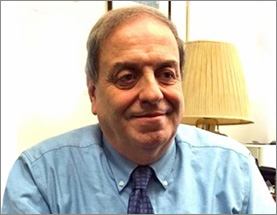
  • Exploring Pathogenic Virus Diseases with Professor St. Patrick Reid

    Exploring Pathogenic Virus Diseases with Professor St. Patrick Reid

    Dr. Reid specializes in host pathogen interactions studies such as investigating the chikungunya virus infection and Ebola virus microbiology.  A returning guest, he and Richard discuss all things virus in this episode as Dr.

    Reid will contribute to Richard’s upcoming book on viruses.

    Their conversation covers

    • Why it’s significant that all life forms have associated viruses, including ancient bacteria discovered recently in glacial inlands that have phages (viruses that infect bacteria);
    • What implications exciting virus discoveries may hold, such as the giant Mimivirus, which may prove an evolutionary bridge; and
    • How we can investigate virus characteristics like means of entry and coopting of cellular machinery to better understand means of replication and evolutionary success as well as how cellular machinery works in the first place.

    St. Patrick Reid is an assistant professor in the Pathology and Microbiology Department in the University Of Nebraska Medical Center College Of Medicine.

    In a previous podcast, he and Richard discuss chikungunya diagnosis and pathology and Ebola virus symptoms and behavior. He begins this discussion explaining his journey into the field, which includes exciting postdoc work in France on Ebola. Now his researcher involves host pathogen interactions and he’s particularly interested in different host proteins a virus has to recruit to replicate.

    The conversation takes a turn into exploring what scientists have assumed about viruses compared to recent discoveries that may take that knowledge in new directions. For example, he talks about ancient phage discoveries in glacial bacteria and phage-bacteria coevolution. He describes an interest in how viruses that infect bacteria allow those bacteria to live in a community of other bacterium.

    The viruses actually play a role in enabling those bacteria to survive.

    He discusses numerous other virus characteristics and implications, from DNA versus RNA viruses and what that dictates regarding habits like latency.  He also addresses when that understanding changes with new discoveries, such as finding Ebola virus in chimps months after infection. They also talk a little virus philosophy and cover topics like what enables virus entry into cells and how tropism works.

    For more about Dr. Reid and his work, see his website at the university, unmc.edu/pathology/faculty/bios/reid.html, and follow him on Twitter as @StPatrickReid3.

    Available on Apple Podcasts: apple.co/2Os0myK

  • The Ecology of Infectious Viruses with Clinical Professor Joseph Masci

    The Ecology of Infectious Viruses with Clinical Professor Joseph Masci

    While Dr. Jospeh Masci could speak on numerous specific issues in the realm of infectious diseases microbiology, today’s discussion centers on a general exploration of virus behaviors and characteristics.

    In this podcast, he addresses

    • Why he centered his work on the study of common infectious diseases and those with special urgency such as HIV/AIDS and COVID-19; 
    • How varied virus behaviors are, from the speed at which they infect to their morphology and their means of infection; and
    • How these behaviors indicate even more mystery about the history of virus origin, relationship to the evolution of bacteria, and intracellular-dependence.

    Joseph R. Masci is a clinical professor of Medicine, Infectious Diseases, Environmental Medicine and Public Health, and Global Health at Mount Sinai. His expertise includes HIV/AIDS diagnosis and treatment, general infectious diseases, tropical medicine, and emergency preparedness.

    He’s currently coauthoring a book with Richard about viruses. He begins by describing how he was inspired by the infectious disease faculty in medical school and went on to work in the area, meeting the AIDS crisis and bioterrorism concerns post 9/11, and now is heavily focused on investigating COVID-19. The conversation turns into speculations about whether viruses should be considered alive and if that designation ultimately maters. This opens up a deep dive into virus behaviors.

    One particular characteristic that varies by virus and therefore effects infectious disease treatment is latency or the dormant stage.

    He discusses how such a period is quite common in many viruses, commenting that HIV can have long latency while cold viruses might hold dormancy for only a day or two. He connects this with how the virus takes hold in human cells and why this timing differs according to the virus mechanisms. They also discuss what factors dictate virulence and when passage from human to human increases or decreases the virulent attributes with specific examples.

    He adds that it’s important to consider what the host contributes to the interaction as well as other organisms and compounds.

    The discussion also delves into virus origins, the nature of bacteria and virus coevolution, signaling between viruses, and the possibility of viruses working together with job-specific attributes.

    For more, see his NIH work and his website at Mount Sinai: mountsinai.org/profiles/joseph-r-masci.

    Available on Apple Podcasts: apple.co/2Os0myK

  • A Proofreading Virus: Mark Denison Discusses his Coronavirus Research

    A Proofreading Virus: Mark Denison Discusses his Coronavirus Research

    Researcher Mark Denison has studied infectious diseases and specifically coronaviruses for decades and he explains some unique elements of their daunting mechanisms.

    He discusses

    • What’s different about their genome size, replicating capabilities, protein encyclopedia, and more;
    • How the enzyme that provides its proofreading system is a standalone in RNA viruses and why that’s important to its function; and 
    • How all these variables are working toward different theories about ways to manage its infiltration.

    Mark Denison is Director of the Division of Pediatric Infectious Diseases at Vanderbilt University. He’s spent much of his career working with coronaviruses and was concerned about a scenario like our current one long before March. He backs up and explains some general findings about coronaviruses including their unique capacity for rapid evolution and adaptation, entry, recruitment of cellular machinery, and so on.

    He tells listeners that they have significantly more base pairs than other RNA viruses. In fact, this is one of the largest RNA replicating genomes known. Its mechanisms are responsible for symptoms like recurrent fever causes and vulnerability for immunodeficiency sufferers.

    In 2007, Dr Denison and his team made a significant discovery about this type of virus after years of mystification surrounding its ability to regulate itself, as if it were not error prone, unlike other RNA viruses. They found that coronaviruses are the only known organisms that encode an RNA-dependent, RNA-proofreading system. Many organisms have a proofreading system for copying, but most RNA viruses, like dengue for example, lack the ability to fix mistakes.

    They create a crowd of mutants around them.

    Denison explains how this determines the ecology of most RNA viruses and how the enzyme that proofreads for coronaviruses makes for a very different ecology and virulence quality. He also explains the experiments his lab has made on the SARS-CoV-2 “wild-type” virus they’ve worked with to either decrease or increase its mutation rates as well as connections with therapy possibilities.

    He addresses concerns about flu season and the difficulty in diagnosing recurrent fever causes when both are an issue. Finally, he offers a reality check on what we can predict about SARS-CoV-2’s future in the general population and those with immunodeficiency.

    For more, google his name and see his lab website: www.vumc.org/denison-lab.

    Available on Apple Podcasts: apple.co/2Os0myK

  • Humidity, Vitamin D, and Coronavirus: Jeff Gusky Connects the Dots

    Humidity, Vitamin D, and Coronavirus: Jeff Gusky Connects the Dots

    ER doctor Jeff Gusky presents a strong case for key prevention measures of COVID-19 transmission and is eager to spread the word.

    He tells listeners about

    • The connection between low humidity and Vitamin D levels increasing COVID-19 infections, 
    • Numerous examples that show how this is mirrored in hot spots and differences in country contagions, and
    • Ways to mitigate these causes and how his grassroots movement is trying to spread the word.

    In addition to being an ER doctor, Jeff Gusky is a National Geographic photographer and an explorer. In this podcast he addresses urgent concerns he has about COVID-19 in light of the approaching flu season as well as for folks with vitamin D deficiencies.

    His concern for flu season actually centers on the low humidity levels in cooler months.

    Therefore, he’s launching two grassroots initiatives to spread his concerns: 1. Don’t Go In and 2. Get started, Get Tested, Get Right.

    The first initiative emphasizes the dangers of low humidity and urges people to get a hydrometer and not enter spaces below 50% absolute humidity. He asserts that COVID-19 infection only happens indoors in dangerously dry air and is completely tied to weather conditions. He’s concerned that as fall approaches and the air gets dryer, the virus will infect more easily.

    He mentions findings and studies to support this trend and describes different climates that have seen different infection rates.

    His second initiative connects vitamin D and coronavirus infections. Studies have shown a correlation between vitamin D deficiencies and trouble with COVID-19; therefore, he urges listeners to get their vitamin D levels assessed and supplement if low. He provides more detailed numbers and findings in the podcast as well and discusses his free webinar to promote these issues.

    Jeff Gusky just completed this 16-minute webinar about GOING ON OFFENCE AGAINST THE VIRUS.

    For more information, watch his webinar. He’s also happy to take questions by email: jeffgusky@gmail.com

    Available on Apple Podcasts: apple.co/2Os0myK

  • The Chikungunya Virus Infection and Other Host-Pathogen Interaction Examples with St. Patrick Reid

    The Chikungunya Virus Infection and Other Host-Pathogen Interaction Examples with St. Patrick Reid

    What exactly does a virus do to invade our bodies? Scientist St. Patrick Reid addresses the mechanics through specific virus pathologies.

    He addresses

    • How viruses use proteins to undercut the immune system and ensure replication,
    • How the chikungunya virus infection has become more prevalent and often leaves chronic symptoms, and
    • Why these lasting effects from this RNA virus are especially puzzling and how scientists approach such questions.

    St Patrick Reid is an assistant professor in the Department of Pathology and Microbiology at the University of Nebraska.

    He focuses on the virology of proteins encoded by highly pathogenic viruses like the chikungunya virus infection. He explains what this means by describing his graduate and early career studies on Ebola and other host-pathogen interaction examples.

    Ebola is able to invade an organisms by encoding for proteins that block the immune system from responding.

    This gives the virus enough time to amplify itself and replicate. When the body is finally able to react, the virus is so pervasive it over reacts, often unleashing a dangerous over-response; in fact, this is what happens with COVID-19.

    Dr. Reid than describes the history of the chikungunya virus infection and how it has made its way from one part of the world to another, including South America and the southern United States. Transmitted by mosquitoes, it often results in a debilitating arthritis that can last for years and scientists don’t understand how or why. In fact, that’s one of his areas of research, to understand its pathology. As an RNA virus, it does not invade the nucleus and change the genome.

    He explains some possible theories and his own approach to solving this mystery. He also discusses his thoughts on COVID-19 from his protein-focused research and describes the magnanimous ways researchers are working together across the world to find ways to combat its effects.

    The best way to keep an eye on his work and learn more include following him on Twitter as @StPatrickReid3 as well as reviewing his university lab web page at unmc.edu/pathology-research/microbiology/virology/reidlab.

    Available on Apple Podcasts: apple.co/2Os0myK

  • Truth-Telling Amid COVID-19: Asking the Critical Questions—Pamela Popper, PhD, ND—Wellness Forum Health

    Truth-Telling Amid COVID-19: Asking the Critical Questions—Pamela Popper, PhD, ND—Wellness Forum Health

    Dr. Pamela Popper is the president of Wellness Forum Health, a company that’s been offering a number of health and wellness services for the past 25 years. In this episode, critically important questions about COVID-19—the ones you won’t hear in mainstream media—are asked and answered.

    You’ll learn:

    • Why so many people’s videos are being censored and taken down during this pandemic—even those by credible medical doctors and scientists whose honesty and data contradict the narrative of the CDC, WHO, and mainstream media
    • How many billions of dollars big pharma paid in advertising just last year to five major news outlets, and how this could be shaping the type of information we’re being told through those news outlets
    • What next…once we accept that things aren’t exactly as they might appear? How do we retain our civil liberties?

    At first, we were told by health officials that masks couldn’t stop the spread of the virus, and even worse, that they might increase the likelihood of contracting it, but now we can’t buy food in most parts of the country without wearing one.

    Conflicting information has been coming at us through mainstream media outlets since day one, yet at the same time, popular platforms like Twitter and YouTube are actively censoring anyone who shares information that doesn’t align with a very specific narrative—the same narrative that’s touted in 24-hour news cycles, commercials, social media platforms, billboards, and even by many of our friends, family members, and neighbors.

    There is no end in sight. Will there be a second wave? Or are we already in the second wave, and waiting for the third? Is this really the “new normal” that we all just need to accept, one in which our children can return to school only if they wear a mask and stay far apart from their peers and teachers at all times, or else risk death? In this landscape, honest and credible medical doctors are being barred from documenting their clinical stats and perspectives on the handling of this virus. We must ask why.

    What about the doctors who admit that they’re being pressured and monetarily incentivized to write COVID-19 on death certificates? What about the conflicting results from multiple COVID-19 tests on one person, or the fact that the PCR test used isn’t a diagnostic tool at all, but a laboratory technique?

    How do we make sense of all of this? Dr. Popper provides a compelling answer that she can back of with extensive research and evidence, explaining “That’s how you destabilize a population, and that’s what this is really all about…If you want to completely take control of people, you make arbitrary rules and change them often, you make sure that people are separated and they can’t assemble…you turn the people against one another, and then you can take over a population of people…Hitler…Stalin…Castro did it…What we’re watching is how you can take over the world using the same strategies…”

    Dr. Popper provides a concise list of the four things that were necessary in order to bring about this pandemic, and what the powers that be—namely the CDC and WHO in conjunction with other powerful actors—didn’t count on.

    To learn more about making sense of the state of the world, and to unite with like-minded Americans, visit https://makeamericansfreeagain.com/.

    To find information on Dr. Popper and Wellness Forum Health, visit https://wellnessforumhealth.com/. To check out Dr. Popper’s informative and eye-opening videos on COVID-19, search for her channel on YouTube.

    Available on Apple Podcasts: apple.co/2Os0myK

  • Coronavirus Conversations—Robert Siegel, PhD, MD—The Department of Microbiology and Immunology, Stanford University

    Coronavirus Conversations—Robert Siegel, PhD, MD—The Department of Microbiology and Immunology, Stanford University

    Robert Siegel is a professor in the Department of Microbiology and Immunology at Stanford University and commentator on coronavirus for several news outlets. He joins the podcast today to share his expertise.

    Tune in to discover:

    • What viruses have been definitively linked to some of the most important cancers
    • What type of basic information we do and do not know about COVID-19
    • Why Siegel believes things will look worse in six months than they do now in terms of the current pandemic

    Siegel started teaching about viruses over four decades ago during a course on the biology and causes of cancer. He teaches in public education, and works for a number of non-governmental organizations doing prevention work on HIV in regions of Africa, and malaria in Papua New Guinea.

    Most recently, he’s been working with students on a review of asymptomatic and pre-symptomatic transmission of the current coronavirus.

    He explains where the gaps in our knowledge lie with regard to the current pandemic, for example knowing what percentage of people who are positive for the virus yet asymptomatic will become symptomatic.

    He discusses mutation rates and replication of coronaviruses more generally, and the speed with which the molecular biology of COVID-19 has been understood.

    “It’s possible that we may have a vaccine in six months, or a year, or two years, or five years, but we can’t be sure; it’s possible we may have some very effective therapeutics by the end of the year, or in two years, or five years, but don’t know for sure; the only thing we know for sure is that behavioral interventions are capable of stopping this virus,” says Siegel.

    He goes on to explain the things that get in the way of behavioral intervention, which include psychological, economic, and political impacts. He advocates for a long-term perspective when it comes to thinking about this virus, and shares what he believes needs to happen right now in order to start getting rid of it.

    Available on Apple Podcasts: apple.co/2Os0myK

  • The Viruses of Microbes—Simon Roux—Joint Genome Institute

    The Viruses of Microbes—Simon Roux—Joint Genome Institute

    Simon Roux is a member of the metagenome project at the Joint Genome Institute, which is a part of the Berkeley Lab. In this episode, he discusses his research on viruses that affect microbial life.

    Tune in to discover:

    • How nutrient, UV, and chemical stress of the host cell could trigger the lytic cycle of viral reproduction
    • What is unique about filamentous bacteriophage
    • How phage predation could drive speciation of microorganisms
    • How biofilms can protect microbes from viruses

    These days, it seems all the world has its focus on one virus, but Roux reminds us that there are likely billions of viruses in the universe, with at least one for every species on Earth.

    Over the course of the last five years or so, we’ve gone from having discovered just a few thousand virus genomes to now two million virus genomes. This is a massive amount of growth in data, and according to Roux, viruses will just continue to be discovered for the foreseeable future.

    As part of the metagenome project, Roux uses a number of ‘omics’ to study the genetic composition and function of viruses, including metatranscriptomics and metabolomics. He focuses exclusively on viruses of microbes, whether bacteria, archaea, or protists. He explains that contrary to what many people think, viruses don’t just kill their host cells, but carry out an array of activities and may choose between a lytic infection and a chronic infection.

    Roux discusses a number of topics involving phage, the viruses of bacteria. With over ten years’ worth of data at their fingertips, Roux is one of many researchers asking questions about the nature of the interactions between host cells of different types of microbes and viruses across microbial species.

    To learn more about the work being done at Berkeley Lab and the Joint Genome Institute, visit https://www.lbl.gov/ and https://jgi.doe.gov/.

    Available on Apple Podcasts: apple.co/2Os0myK

  • New Multi-Virus Diagnostic Method by Broad Institute

    New Multi-Virus Diagnostic Method by Broad Institute

    Cheri Ackerman and Cameron Myhrvold explain their innovative new system to test for multiple viruses in one test.

    They explain

    • The overarching goal of low cost alongside high scale allowing multiple diagnostics at once,
    • How a microwell array chip and criprs cas-13 work together in this test, and
    • How the timing of this test works and their future goals. 

    Dr. Cheri Ackerman is the cofounder and CEO of Concerto Biosciences and Dr.

    Cameron Myhrvold is a post doc fellow at the Broad Institute of MIT and Harvard. In this podcast they discuss their project to develop a new virus diagnostic method that involves cripr.

    While there are several standout attributes to this new diagnostic, an integral element is that it tests for multiple viruses at once. They explain that they wanted to answer what is making a person sick by testing for different viruses at the same time.

    The technology can by summarized as using crispr cas-13 diagnostics in a microwell array.

    This allows different detection reactions for multiple viruses and multiple patients at the same time. As with common COVID virus PCR tests, it starts with a nasal swab. After taking the swab and performing sample preparation as with a PCR test, the process starts to differ, specifically in two ways: the detection is conducted with a small volume, which allows them to do many tests on the same sample; second, the test allows for all of these reactions to set themselves up on their own.

    Detection regents and samples self-organize in a way that gets a robust result that crispr cas-13, as an RNA target, allows.

    They explain the method in more detail as well as goals for improvement, including reducing the turnaround time from 7 to 3 hours. Listen for more details about this exciting technology.

    To keep tabs on this and related work, visit www.broadinstitute.org.

    Available on Apple Podcasts: apple.co/2Os0myK

  • Virus Diversity Dependent on Host: Marilyn Roossinck Discusses Her Research

    Virus Diversity Dependent on Host: Marilyn Roossinck Discusses Her Research

    Professor and virologist Marilyn J. Roossinck describes her work and interesting elements of virus behavior.

    She tells listeners

    • Why plant viruses became the focus of her research,
    • What she’s learned about the host impact on virus diversity, and
    • How her work on persistent plant viruses has changed how she conceives of the larger virus community.

    Marilyn J. Roossinck, Ph.D. is a professor in plant pathology and environmental microbiology and biology. She’s at the Center for Infectious Disease Dynamics at the Huck Institute of Life Sciences at Pennsylvania State University.

    She describes for listeners how she first became interested in the field of virology and where that interest took her. Because viruses evolve rapidly, they can be a helpful vehicle for observing evolutionary processes. One of her early studies involved watching virus mutations of RNA viruses, noting the diversity of their populations.

    She then describes the work she’s done with the cucumber mosaic virus. Because the virus infects about 1,200 different species, they could compare virus evolution by starting with clones of the cucumber mosaic virus and see how the exact same virus progressed differently among host plants. Contrary to general thought, they found the virus behavior and diversity was dependent on the host plant. 

    She discusses some other studies including on a virus that has coevolved with the jalapeno and other pepper plants and what that plant virus accomplishes for that plant. She also talks about her work on a virus found in fungi that inhabit geothermal soil and viruses in Costa Rican plants. She explains how this work has caused her to think of viruses differently, as beneficial for the most part. In fact, she says pathogenic viruses are actually quite rare. 

    For more about her work, see roossincklab.com.

    Available on Apple podcast: apple.co/2Os0myK

Accessibility Close Menu
Accessibility menu Accessibility menu Accessibility menu
× Accessibility Menu CTRL+U