Podcast Categories: Viruses

  • Walking The Knife’s Edge: Michael Betts Talks Immune Response to Viral Infection

    Walking The Knife’s Edge: Michael Betts Talks Immune Response to Viral Infection

    Professor Michael Betts articulates the dramatic directions our human immune system can take responding to viral pathogenesis. He studies how humans combat viral pathogens and diseases through adaptive immune responses like T and B cell activity.

    He shares his perspective on virus capabilities with lively and clear language as Richard asks questions for his upcoming virus book project.

    Listeners will learn

    • Why the primary goal of viral replication leads to a variety of fascinating shapes and virus mechanics,
    • How some viruses have a hit-and-run strategy and others want to set up shop and stay, and 
    • What he sees as the most fascinating types of viruses and why. 

    Michael Betts is a professor of microbiology with the Penn Institute for Immunology Studies in the Perelman School of Medicine at the University of Pennsylvania. He researches the human immune response against viruses in relation to HIV infection and SARS-CoV-2 by focusing on T cell function.

    He is able to use his expertise to add interesting perspective to the pathogenesis or protective human immune response. He is able to use examples for his extensive HIV studies to elaborate on how our immune system reacts to all that viruses can send our way.

    As they move into Richard’s questions to get at virus characteristics, Dr.

    Betts gives his take on whether viruses are alive and why they have evolved to have such a variety of interesting shapes. He describes some of his favorites and adds that while the shapes differ, the strategy is the same.

    They’ve evolved to protect and deliver genetic material into the cell.

    He adds that these different machines act like spring-loaded mechanisms, and once they get the proper trigger and deliver the genetic payload, we see consequential downstream effects. Even eukaryotic infections, he adds, that are even more complex have this goal—HIV has a wrapper that induces protein confirmation change and shoots the genetic material into the cell. He describes other fascinating examples of viral pathogens in humans as he answers Richard’s questions, filling in more details about the vast world of viruses.

    For more about his work, see his lab’s website: bettslab.org.

    Available on Apple Podcasts: apple.co/2Os0myK

  • It’s Complicated: Luis Villarreal Talks Virus-Host Relationship

    It’s Complicated: Luis Villarreal Talks Virus-Host Relationship

    Another in a series focusing on viral characteristics, returning guest Luis Villarreal graces listeners with an in-depth and elegant collection of thoughts on how viruses behave.

    He shares a lifetime of knowledge, discussing

    • What a virus’ ability to communicate meaningful biological information adds to the “are viruses living” question,
    • How our very immune system existence may stem from virus-cell interaction, and
    • Why we need to rethink how “fitness” works as a virus evolution impact factor.

    Luis Villarreal is a professor emeritus in the Department of Molecular Biology and Biochemistry at the University of California, Irvine, and is the founding director of The Center for Virus Research. He’s spent the bulk of his career on virology.

    His fascination began when he came across an image of a crystalline array of an RNA virus in the cytoplasm of an infected cell.

    He was intrigued by the interface of life and chemistry and it struck him that all viruses existed in that interface. Therefore, when Richard asks if “viruses are living or nonliving,” he verbalizes the answer in terms of this interface, emphasizing that viruses have always provided one of the more important or crucial aspects of communication into all living entities. This communication is essential in virus-host cell interaction.

    The conversation continues in this same tenor, characterizing viruses as existing in dynamic relationships that determine virus evolution over time. He offers HIV as an example of addressing the seat of control with the host cell versus the virus.

    After HIV infection, other viruses in human cells started to reactivate because of this give-and-take control dynamic: there’s no one controlling factor or outcome. Rather, it’s all about biological strategies clashing.

    Stories about these clashes continue through the discussion, and he address the origin and evolution of viruses and how viruses persist with answers that take all elements of these dynamic relationships into account, including one example from a graduate school undiluted viral passage study. He found that the eventual defective virus that evolved, which was what might be termed “unfit,” exerted tremendous control over the infective virus. Perhaps, he adds, we need to reimage how we apply evolutionary biology to viruses.

    For examples of his work, find numerous listing in ResearchGate.

    Available on Apple Podcasts: apple.co/2Os0myK

  • Niches of Opportunity: Researcher Gareth Brady Takes Listeners down the Virus Pathway

    Niches of Opportunity: Researcher Gareth Brady Takes Listeners down the Virus Pathway

    Gareth Brady specializes in how viruses and immune systems play hide and seek, evading or triggering various responses like inflammation. In this discussion, he adds precise and evocative information to Richard’s virus investigation.

    He answers with an intriguing intensity, offering listeners key insights into the following:

    • How viruses invade our complex system of adaptive and innate immunities and how inflammation and interferon participate, 
    • How viral sensors were discovered in our cells only recently and what we can learn from their behavior, and
    • Why influenza coinfections are particularly dangerous and what does that tell us about how viruses adapt to our immune system.

    Gareth Brady is the Ussher Assistant Professor in Clinical Medicine at Trinity College in Dublin. His current work is in the Translational Inflammation Research Group investigating viral structure and functions for inhibiting pathways to the immune response. He touches on multiple complex topics with ease, from viral entry mechanisms to viral spread and virus adaptation.

    He begins with an intriguing description of a particular virus he studies, which is a virus in the pox family tree called, Molluscum Contagiosum Virus (MCV). It’s only able to infect humans and doesn’t cause disease—this indicates it is very good at getting around the immune system. If he can understand how it evades the immune system, it may lead to valuable understandings of how to inhibit damaging inflammation.

    He also explains virus behavior in such a way that listeners will gain solid insight into innate and adaptive immunity processes and the long chain of events that trigger symptoms we eventually experience from inflammation to fever. He then applies this explanation to how different viruses, such as SARS-CoV-2 (COVID-19), cause lung swelling that is so detrimental. He is able to take this lesson and expand listeners’ understanding of how this process applies to virus latency, incubation periods, and coinfection.

    He describes the virus and immune response process as a cold war in an arms race. He comments that it’s evolved to be complex because viruses have evolved to be more and more successful. In turn, viruses have forced humans to evolve multiple sensors to detect them. Furthermore, viruses have evolved multiple ways to get around these sensors and so one. Sit back and listen to this incredible journey through virus and human coevolution.

    For more about his work see his working group page at Trinity: tcd.ie/medicine/thkc/research/inflammation.php.

    Available on Apple Podcasts: apple.co/2Os0myK

  • Behind the Leaf: Plant Virus Expert Marilyn J. Roossinck Adds to Picture of Viral Nature

    Behind the Leaf: Plant Virus Expert Marilyn J. Roossinck Adds to Picture of Viral Nature

    Viral diseases in plants offer advantageous platforms for virology work, which is why returning guest Marilyn J. Roossinck pushed her research focus in their direction. Her knowledge of virus, plant, and fungus interactions adds depth to Richard’s continued collection of expert views on virus functions and habits in preparation for his book.

    She discusses

    • Roles viruses have played in evolution to shape us and how evolution and adaptation have shaped viruses;
    • Fascinating examples, such as how insects work in the transmission of plant viruses; and
    • Surprising functions, such as how the cucumber mosaic virus results from three separate viral particles that infect together to form the genome capable of infection.

    Because plants are inexpensive, abundant, and easy to fit in a blender, they provide an excellent subject for virologists. Therefore, plant pathologist Marilyn J. Roossinck enlightens any attempt to understand virus behaviors.

    She’s a professor of Plant Pathology and Environmental Microbiology at the Center for Infectious Disease Dynamics at the Huck Institute of Life Sciences at Penn State University.

    After introducing her motivation for embracing this field, she helps Richard along his quest for a bigger picture of virus capabilities. Through examples of symptoms of viral diseases in plants and animals, she discusses topics like the percentage of our genome that was converted from retrovirus RNA; these genes insure mammalian survival, making placental development possible.

    As she discusses human organisms as holobionts, listeners can get a much better understanding of the intricate beings we and all living organisms really are.

    For example, some fungal diseases in plants work with viruses for evolutionary adaptations such as the ability to survive heat. She mentions a virus discovered at Yellowstone that, if a fungus is present along with the virus, lends heat tolerance to certain plants.

    Similarly, the cholera bacteria in humans is only pathogenic when accompanied by a phage. In the midst of these interesting examples, she discusses her thoughts on virus mechanisms for entry and infection, viruses’ ability to communicate or signal across cells, and the existence of “helper” viruses with different roles.

    For more about her work, see The Roossinck Lab website and search her name in Google.

    Available on Apple Podcasts: apple.co/2Os0myK

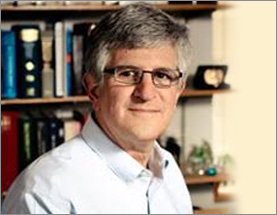
  • Viral Lessons from Vaccines and the Immune Response: Vaccine Expert Paul Offit Talks Viruses

    Viral Lessons from Vaccines and the Immune Response: Vaccine Expert Paul Offit Talks Viruses

    Paul Offit has been working in vaccine research for about forty years and listeners are lucky to hear a sampling of his knowledge of infectious viruses in this podcast. He offers another unique perspective of virus interactions from his vaccine research history.

    With humor and clarity, he discusses

    • How a host’s immune response to viral infection and determine latency more than the virus in some cases,
    • What the viral load and inoculum effect determine regarding degrees of virulence, and
    • What are some viral cell-entry traits that merit important consideration in vaccine development, such as COVID-19’s fusing protein.

    Author, researcher, and pediatrician Paul Offit is the director of The Vaccine Education Center and an attending physician with the Division of Infectious Diseases at Children’s hospital of Philadelphia. Most recently, he authored Overkill: When Modern Medicine Goes Too Far.

    He’s currently working on a biography of vaccinology specialist Maurice Hilleman and an article on the process for COVID-19 vaccine pros and cons and the prospects for a path to a safe vaccination. He offers answers to Richard’s questions on virology from a different vantage point, often emphasizing the role the immune response process plays in determining virus behavior.

    Yet he still is intrigued by virus activity, noting the fascination he has with bacteriophages and their therapeutic potential.

    His take on latency in different viruses is especially enlightening, and he discusses how herpes simplex is latent until some sort of stress weakens the immune system.

    He comments that its latent phase is fascinating as it has the ability to express some but not all proteins during the latent phase. He adds that it comes out of latency because of the host’s immunological surveillance condition: the immune system keeps it from activating until the host’s immunity decreases or is weak and the virus is able to cause symptom expression.

    He also explains virus behavior by articulating how the immunodeficiency virus evolved, mutating enough in the first infection to transmit to someone else and so on, all the while learning how to bind to that certain receptor and suppress the immune system and evade it by constantly changing the code protein, Therefore, HIV infection can mimic infection by a several different viruses at once, and in some ways exhibits the “perfect virus” process for survival.

    He also shares great insights into vaccination research, viral entry methods, and virulence factors in virus evolution. Listen in for an entertaining description of how our immune system handles viruses.

    For more about Dr. Offit, see his website: paul-offit.com.

    Available on Apple Podcasts: apple.co/2Os0myK

  • The Virus Philosopher: Nathalie Gontier Takes Viral Structures and Functions to a Higher Plane

    The Virus Philosopher: Nathalie Gontier Takes Viral Structures and Functions to a Higher Plane

    Nathalie Gontier is a philosopher of science who specializes in evolutionary theory with a focus on viruses and immune system coevolution. This podcast adds a new angle to Richard’s special series exploring viral spread and behavior in preparation for his book.

    She explores

    • How the “are viruses alive” conundrum is addressed by multiple perspectives,
    • How Aristotle and Descartes might approach discussions on viral agency, and 
    • How means of opportunity have shaped virus behaviors such as quorum sensing and entry points.

    Nathalie Gontier is the founder and director of the Applied Evolutionary Epistemology Lab at the University of Lisbon in Portugal. She’s a returning guest and spends this discussion digging deeper into virus types, evolution, and behavior. She’s very interested in viruses because they are one of most common parasites that every life form has to cope with.

    She studies how that interaction occurs and does this work alongside scientists to conceptualize this form of interaction with the hope of increasing our understanding. She establishes from the beginning that viruses do not exclude any form of life from their activity and live inside the cells of archaea, bacteria, and all eukaryotes.

    She addresses COVID-19 directly, noting that it is way up in the food chain of the virus domain. She comments that it is amazing how one virus can spread and effect so many people quickly as we approach about one million dead from COVID-19 worldwide. Then she tackles some of Richard’s tough questions regarding viruses, but gives answers quite different from previous guests with her science philosophy perspective.

    She has solid details to back up her answers, such as a study in Israel that proved quorum sensing and viruses’ ability to communicate about whether to attack their biological host. She ends with an elegant description of their place in our human bio system. Listen in for some sharp discussion and commentary about viruses.

    For more about her work, see the Applied Evolutionary Epistemology Lab page and find her YouTube channel.

    Available on Apple Podcasts: apple.co/2Os0myK


  • HIV Specialist Lili Wang Takes Listeners on Infectious Viruses Tour

    HIV Specialist Lili Wang Takes Listeners on Infectious Viruses Tour

    Lili Wang, Ph.D., has worked with viruses for 14 years and her latest focus is HIV. She’s studying the amazing mechanics of the virological synapses of HIV, which allow the virus to transfer from infected to uninfected cell. But for this podcast, her job is to help Richard with his virus project, providing in-depth, enlightening answers to his questions.

    She discusses

    • The evolution and coevolution of infectious diseases,
    • The different entry mechanism of common infectious diseases and why such variety evolved, and
    • The role viruses have played in our evolution and how she thinks they have molded what we are.

    Lili Wang, Ph.D. is a scientific researcher and instructor in the Department of Medicine at the Icahn School of Medicine at Mount Sinai. A member of the Benjamin Chen Laboratory, she’s made solid progress in HIV research and continues her work in infectious disease microbiology.

    In this discussion, her virology background helps Richard grapple with his research questions with precise details of viral mechanics.

    She describes the coordinated manner with which viral cascades may work after cell entry and describes how evolution has continually refined these processes.

    She provides substantive explanations for the trigger systems and how receptors work for these different forms of entry viruses take.

    Especially interesting is her description of the “not deliberate, but still not random” nature of viral actions, a key moment in this interview and why researchers grapple with how to categorize viruses in the alive/not alive debate. She adds information about how viruses might use sensing mechanisms and then pivots to more categories, comparing the actions and coevolution of bacteria and viruses and how plasmids and extracellular vesicles fit in this picture of microorganisms.

    Finally, she gives an overview of the tight combined forces of our own microbiomes and viruses, bacteria, and phages, how the balance of these organisms keep us healthy and can be considered part of our very life: if they are disturbed or out of balance, we become ill. Listen in for more about how viruses work to make us who we are.

    For more information about her work, see her lab page and search for her in research aggregate sites.

    Available on Apple Podcasts: apple.co/2Os0myK

  • Viruses Are Dumb, But We Can Learn From Them Nonetheless: A Conversation with Adolfo Garcia-Sastre

    Viruses Are Dumb, But We Can Learn From Them Nonetheless: A Conversation with Adolfo Garcia-Sastre

    How do viruses hijack your body’s cells?

    Why do they cause infectious disease in some people and not others, and what can they teach us about human biology? The COVID-19 situation is unprecedented, but the research questions it’s triggered aren’t the first of their kind.

    Tune in to discover:

    • Why viral mechanisms that appear sophisticated might be simpler than you think, and how they are surprisingly error-prone
    • How to understand the relationship between viral infection mechanisms and mechanisms of viral spread
    • How genetic information and knowledge is passed to and from viruses

    With over 25 years’ worth of research experience on the molecular biology of influenza viruses, Adolfo Garcia-Sastre is both a professor in the Department of Microbiology and Director of the Global Health and Emerging Pathogens Institute of Icahn School of Medicine at Mount Sinai. For Garcia-Sastre, studying viruses is a way of simplifying the study of more complex organisms, including humans.

    “Most people think that…viruses are smart, and that they come with very smart mechanisms…I am one of the few scientists that believe the opposite; I think that viruses are extremely dumb…they are just what they are because that’s what they’ve evolved to,” he says.

    He continues by explaining why he’s developed this uncommon understanding of viruses, hitting on a number of compelling topics along the way, including viral latency, virus virulence and the balance between infecting a host and keeping it alive, the transfer of genetic information in the evolution and adaptation of infectious viruses, and why he views the question, “Are viruses alive?” to be one of mere semantics.

    Available on Apple Podcasts: apple.co/2Os0myK

  • Delving into Viruses and Immune System Dynamics with Shiraz Shah

    Delving into Viruses and Immune System Dynamics with Shiraz Shah

    Returning guest Shiraz Shah specializes in bioinformatics. He uses microbial data analysis to uncover the complex and fascinating relationships between viruses, bacteria, and chronic conditions like childhood asthma.

    This conversation serves as part of a series in preparation for Richard’s upcoming book on viruses, and Shiraz Shah shares his unique and valuable perspective on viral structure and functions gleaned from years of cutting-edge analysis.

    Topics include

    • How CRISPR research and techniques are derived from bacteria snipping and retaining parts of viruses that infected the bacteria,
    • How human DNA is part of the evolution arms race between bacteria and viruses, and
    • How the presence of a type of prophage in a person’s gut can make the difference in immune therapy cancer treatment and what this implies about the complex influence of viruses. 

    Shiraz Shah is a senior researcher at the Copenhagen Prospective Studies on Asthma in Childhood (COPSAC). Much of his graduate work focused on CRISPR-Cas9 bioinformatics. His current work involves analysis of data regarding bacteria hosts and viruses in the gut microbiome in particular.

    He explains how this analysis works at the level of genomics; for example, a virome sequencing might be compared to numerous other protein sequences in a search for significant patterns. COPSAC plans to take this collection of virus and bacteria data and follow the cohort of children for any corresponding organisms that might indicate causes or preventions of childhood asthma.

    This opens up into an enlightening conversation about the complex role of phages, which are viruses that use bacteria as their host cell. Viruses are everywhere, Dr. Shah asserts, and he believes our old view that viruses are predominantly dangerous, mostly causing sickness, is outdated. Most of us and the kids COPSAC studies are full of viruses without any sickness. So, what are those viruses up to? Replicating. And that effort makes for a sometimes commensal or mutualistic host relationship.

    Dr. Shah explains that scientists see a lot of prophages that are maintained over several generations and kept by bacteria because they help the host bacteria.

    He and Richard bring up examples involving cancer and cholera, where a phage’s presence changes the bacterial response in a human body in numerous ways, sometimes beneficial or commensal, and sometimes towards more virulent behaviors.

    Dr. Shah and Richard also debate the level of intent, signaling, and quorum-sensing abilities of viruses. Near the end of their conversation, Dr. Shah explains that his present work, called viromics, may have as a significant impact as metagenomics. In a few years, scientists may therefore have a completely different and exciting view of viruses. Listen in for an expert’s view of this new type of foundational research.

    For more about Shiraz Shah, see his page at COPSAC: copsac.com/home/about/staff/shiraz-shah/.

    Available on Apple Podcasts: apple.co/2Os0myK

  • Catching the Virus Evolution: Renowned Biologist Eugene Koonin Discusses the Vast Virus Universe

    Catching the Virus Evolution: Renowned Biologist Eugene Koonin Discusses the Vast Virus Universe

    In this podcast, returning guest and computational biologist and author Eugene V. Koonin and Richard examine intriguing angles of virus behavior. Dr. Koonin is a contributor to Richard’s upcoming book on viruses, and Richard sees him as a cornerstone of his own biological knowledge.

    An expert on the origin and evolution of life, Dr. Koonin graces listeners with fascinating ideas, such as

    • Where viruses sit in the continuum of the evolution of life on earth in relation to ancient replicons and the first cells,
    • What his definition of a virus is and how that collides with the categories of living/nonliving, and
    • How he describes the “sensing” abilities of viruses and explains virus competition and identity.

    Eugene V. Koonin is a senior investigator at the National Center for Biotechnology Information (NCBI), the National Library of Medicine, and the National Institute of Health. He’s the author of several books, including Logic of Chance: The Nature and Origin of Biological Evolution.

    One of a series where Richard interviews contributors to an upcoming book, this conversation explores Dr. Koonin’s early days of studying virology and how far science has since come in understanding the machinations involved. It was, in fact, his first studies on virus genomes and trying to decipher those codes that lead him into his present focus on computational biology.

    Richard steers him towards several important questions on the nature of viruses and this gives Dr. Koonin opportunities to speak on some of their most surprising characteristics. He asserts that viruses are an intrinsic part of the biological realm and have their own evolutionary fate or trajectory; in other words, they experience their own selective factors that in turn shape their evolution.

    In this sense, he adds, they are substantially independent from their host; however, they are also completely dependent on their host for energy production. Therefore, they have same characteristics of life and yet are missing others. It is the tension in this mix of evolutionary force and obligate nature that makes them worthy of such discussions. Listen in to enjoy this intelligent entry into virus behaviors.

    For more about his work, search his name in science publication aggregates and see his website at NCBI: ncbi.nlm.nih.gov/research/groups/koonin/.

    Available on Apple Podcasts: apple.co/2Os0myK

Accessibility Close Menu
Accessibility menu Accessibility menu Accessibility menu
× Accessibility Menu CTRL+U