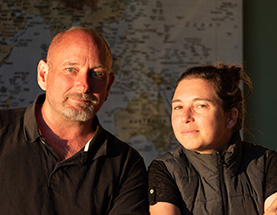
Today we dive into the nature of trauma and PTSD with Chris Orton of Bluebonnet Trails Community Services. Chris offers peer support, resources, and education to first responders, veterans, and their families in Round Rock, TX.
Chris served as a police officer for close to 30 years. During this time, he suffered a significant amount of trauma. Drawing from these experiences, he sought a career in trauma training to help others that are facing mental health issues distinct to those who have served as first responders…
In this conversation, we discuss:
Different types of trauma that law enforcement officers face.
The psychological impact of not sharing your trauma.
When a good time to receive trauma training is.
Want to learn more about Chris and his work with Bluebonnet Trails Community Services? Click here now!
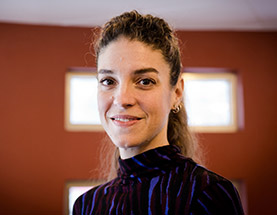
In this episode, we explore the astounding world of blood transfusions with Carly Newton and Lori Harada. Both Carly and Lori are registered nurses who work as managers at Terumo Blood and Cell Technologies, a global leader in blood component, therapeutic apheresis, and cellular technologies.
Blood transfusions are life-saving medical procedures that continue to revolutionize modern healthcare. So how do professionals like Carly and Lori drive innovations and advancements in this field? Join the conversation now to uncover essential insight from the leading experts on blood transfusions…
Click play to find out:
Various reasons why someone may need a blood transfusion.
The healthcare advantages that donating blood can provide.
How sickle cell patients can benefit from red blood cell exchange.
The different types of transfusion therapies.
You can learn more about Terumo Blood and Cell Technologies by clicking here!
How can the impact of wastewater on the environment be reduced? A future of fewer pollutants may be possible through new technologies that can purify or mitigate contamination. Listen up to learn:
The function of the black box
Possibilities for low-energy purification techniques
Why the level of stream contamination matters for determining treatment techniques
Satinder K. Brar, a professor and Chair in Environmental Engineering at York University, and Rama Pulicharla, a post-doctoral visitor at York University, share their work with wastewater and environmental technology.
Pollution has been a problem for our waterways for much of recent history.
However, if we do not find strategies to curb this contamination, the effects over the near future can be catastrophic.
By using a combination of physical and biological techniques, purifying bodies of water can be achieved.
However, it is crucial to tailor the strategy for the unique situation, making finding a one-size-fits-all solution quite challenging.
To learn more, visit https://lassonde.yorku.ca/users/satinder-brar.
The impact microplastics have on the environment is still being uncovered by scientists.
As we learn more about this problem, many researchers are taking proactive steps to mitigate this issue before it’s too late.
Kristi L. Trail is the Executive Director of Pontchartrain Conservancy, a New Orleans-based foundation that is working to create an environmentally sustainable, prosperous, and resilient region. Pontchartrain Conservancy utilizes scientific research, education, and advocacy in order to bring awareness and sustainable care to the Pontchartrain estuary in south-eastern Louisiana.
Listen now as Kristi Trail discusses topics such as:
The microplastic concentration in the Pontchartrain estuary, and the impact this may have on the marine ecosystem.
What triggered the awareness of microplastics in the south-eastern Louisiana area.
What defines microplastics, and how they reveal themselves in nature.
Is there a way to control the growing problem of microplastic contamination? Find out now from a frontline researcher!
To learn more about Pontchartrain Conservatory and its work, you can visit scienceforourcoast.org.
Their ability to spread so quickly can make them near impossible to prevent.
Listen in to learn:
How microplastics spread
Why microplastics may be aerosolized
How modeling the air and water exchange phenomena can produce new insight
Moritz Lehmann, a Ph.D. candidate in physics at the University of Bayreuth, shares his work modeling the spread of microplastics throughout the environment.
Microplastics have presented themselves as one of the most significant dangers to the environment in recent history.
However, much is still unknown surrounding their spread and long-term effects.
Using computer modeling, a better understanding of their origin and spread can be gained, and new solutions to stop it can be produced. Hopefully, if the spread can be controlled, an effort to curb their effects will soon follow.
How can the cast number of microplastics seeping into the environment be mitigated?
Through possible legislation and better product design, it is still possible to turn the situation around. Listen up to learn:
How microplastics are classified
How product design can help stop the production of microplastics
What stands in the way of legislation to alleviate the problem
Richard Thompson, a Professor and Director of the Marine Institute at Plymouth University, shares his work combatting the effects of microplastics in the environment.
Though recent efforts have made incremental progress, microplastics and the degradation of plastic remain significant problems. For example, even the microbeads of plastic in wash-off cosmetics take a tremendous toll on the environment.
However, there is still hope with a more conscious product design process in concert with governmental intervention.
Still, there is much work to do to get government agencies to step in and intervene to produce more beneficial policies.
Researchers are determined to find out what microplastics can do to human health, and how to limit their contamination in our food and water.
Evangelos Danopoulos is a public and environmental health professional with an interest in pollution and how it affects human beings’ overall wellness. With a background as a public health officer and as a Ph.D. student studying medical science with a focus on microplastics, Evangelos Danopoulos analyzes the risks to human health as it relates to emerging environmental contaminants.
Tune in now to learn about:
How evidence-based environmental health policies are formulated.
What microplastics are, and how they pollute food and water.
The process necessary to test water for microplastics.
Hear about this and more in this episode addressing the issues surrounding microplastics and what we can do to mitigate the problem by learning more about them.
You can learn more about Evangelos Danopoulos and his research here, and follow him on Twitter here.
Why does so much trash wind up in our waterways? Without proper action much farther upstream than preventing the last stages of littering, changes can be challenging to make.
How effective litter booms may be
How trash buildups can impact the bacterial microbiome
The levels of microplastics present in consumer products.
Sherri A. “Sam” Mason, Ph.D., the Director of Sustainability at Penn State Eerie Behrend, shares their work on sustainability and how trash makes its way into the water.
Litter has been a problem for much of our recent history, destroying ecosystems and causing irreparable damage in some cases. However, with the rise of plastics and other difficult-to-decompose materials, this issue is only exacerbated.
By looking in bodies of water for microplastics, the more significant issue, on the whole, is attempting to determine how these make their way from the store to the waterways. This is a problem for the consumer as well since microplastics that make their way back into us can be incredibly damaging.
Plastic is a product that is in the vast majority of manufactured products.
The trouble is, plastic is a substance that takes many years to decompose, resulting in a drastic buildup of products that have the potential to harm plants and animals.
Joining us today is husband and wife team Steve and Deonie Allen to discuss atmospheric microplastics, and their impact on the environment. Both Steve and Deonie have traveled the world researching how plastics impact both our planet and its inhabitants.
Listen now to discover:
How microplastics travel to remote locations via the wind.
What products contribute to the world’s plastic problem.
What role waste management systems play in microplastic pollution.
How to identify microplastics in daily life.
What does the future hold for a planet littered with microplastic? Find out now from the research duo leading the charge on this issue!
To find out more about Steve and Deonie Allen and their investigations, visit their website at www.plasticpollution.news.
Associate professor and researcher at the University of Gothenburg in Sweden, Bethanie Almroth, joins the show to discuss her research and expertise in ecotoxicology and microplastics pollution.
In this episode, you will learn:
Roughly how many chemicals are in plastic packaging materials, and under what conditions they could leach out and cause ecotoxicological or adverse human health effects
What kinds of plastic materials are being found on beaches and other spaces in the environment in very significant amounts, and what it is about these materials that makes them likely to end up in the environment
What are nurdles aka “mermaid tears” and what role do they play in ecotoxicology and environmental health and safety
For the past nine years or so, Almroth’s work has revolved around microplastics and the effects of plastic pollution on animal and environmental health. She describes her research as having two main tracks:
#1 What happens when fish are exposed to microplastics? How do the chemicals in these materials affect their health?
#2 Where and how are microplastics released into the environment and how do they travel through food chains? How do we approach the problem of plastic in the environment from a broad, social perspective?
Offer:
TRĒ House products are crafted to bring you the best that legal, delivered-to-your-door THC has to offer. TRĒ House utilizes unique blends of carefully selected minor cannabinoids that get you lit in ways you’ve only ever dreamed of. TRĒ House offers an array of premium, legal THC products including gummies, vapes, prerolls, and more. Head over to trehouse.com and enjoy 30% off your order AND get a free Acapulco Gold HHC preroll when you use coupon code GENIUS. This offer expires August 31, 2023
“Plastic is not one thing; plastic is many things,” says Almroth. The market is dominated by a number of different types of polymers, which are the same polymers found in the environment. According to a report published early this year from China, 350,000 chemicals are registered for sale on the global market. In her own work, Almroth has helped show that there are approximately 1,000 toxic chemicals contained in plastic packaging materials that most of us interact with on a daily basis.